
Swing Plans, Jacking Plans & Rigging Plans Explained
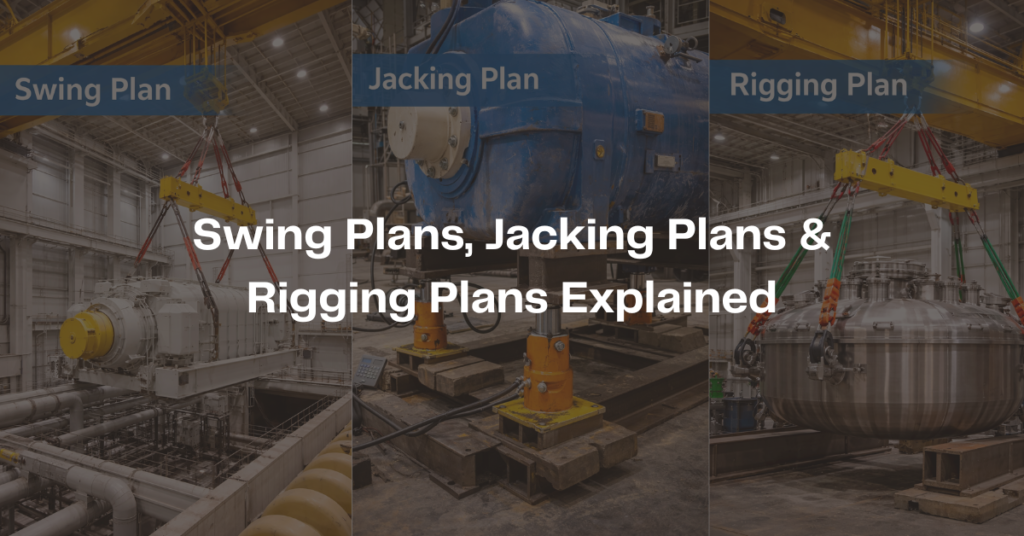
Swing Plans, Jacking Plans & Rigging Plans Explained Successful machinery moving doesn’t rely only on lifting power it’s about precision engineering. Professional engineers will first calculate how the load will move, where the forces will act, and how the risks can be removed before any machinery is lifted, turned, or moved. This is the point at which swing plans, jacking plans, and rigging plans become instrumental in ensuring safe and controlled operations. Knowing these plans can be a good tool to understand why seasoned machinery movers never take any project for granted and always prepare thoroughly. Why Engineering Plans Matter in Machinery Moving Heavy machinery is hardly ever moved in broad, empty spaces. In fact, most machinery relocation projects are done within a cramped factory layout, under low ceiling heights, and in the vicinity of existing structures such as pipes, cables, or operating equipment. Floor load limits, narrow access ways, and the presence of ongoing operations nearby also contribute to the complexity of the situation. Such environments hardly provide space for errors. A small mistake without a proper engineering plan can lead to damaged equipment, structural failure, safety incidents, or costly project delays. This is why seasoned machinery movers depend on thoroughly engineered planning instead of guesses making certain that every move is carried out safely, efficiently, and with complete control. What Is a Swing Plan? A swing plan defines how machinery will be rotated, pivoted, or swung during a lift or relocation. It becomes especially critical when space is limited, the load is long or bulky, or the machinery needs to turn around corners or pass through tight obstacles. In such cases, an uncontrolled motion can turn what would have been a normal lifting procedure into one that is risky. As the load swings, its centre of gravity changes. Unless this operation is well thought out and controlled, the machinery may hit the adjacent structures, become unbalanced when suspended, or even test to the limit the capability of the lifting equipment. The dangers are aggravated to a great extent when the scene of the operation is a compact one such as a factory, a plant or any other facility with very little clearance. Engineers carefully work out swing plans to avoid such cases by taking into account major technical considerations such as: The size of the machine and how the weight is spread Point of lifting and angle of the lift The distance between the machinery and the walls or other equipment The location of the crane or other lifting apparatus The chosen swing path and regulated speed of the movement In industrial settings where space is limited, an accurately planned and executed swing plan might be the factor that turns a controlled and orderly lifting operation into an expensive accident. It guarantees that from the very start to the very end, all the movements are safe, stable, and can be predicted. What Is a Jacking Plan? Jacking plan usually refers to method of lifting and supporting heavy equipment through the use of hydraulic or mechanical jacks especially when cranes are not available or practical. Sometimes, jacking is the only feasible or even the safest method in a lot of situations. Jacking is generally done when the load is heavy and needs to be lifted slowly or when the work space is very limited or when the machine has to be exactly leveled. In contrast to cranes that suspend loads from above, jacks elevate machines by pushing from below. That is why jacking calls for very precise engineering. Even a tiny error in load distribution or jack placement can cause one side to be lifted more than the other, equipment to move unexpectedly or excessive load to be put on the building or on the machine itself. Besides, the ground bearing capacity must be taken into consideration since if, the ground under the jacks does not have enough strength, sinking or unstable condition will be resulted during the lift. To prevent these risks, engineers develop a detailed jacking plan that carefully controls every stage of the lifting process. A proper jacking plan typically includes: Machine weight and centre of gravity Jack load capacity and how many jacks will be needed Where the jack should be placed precisely Detailed instructions on the load transfer and the lifting sequence Safety allowances and emergency measures In Singapore, machinery movements most of the time happen inside operational factories, data centres, and plants. In such situations, jacking plans are indispensable quite often since they enable heavy equipment to be safely lifted, levelled and moved without interrupting the surrounding operations or compromising safety. What Is a Rigging Plan? A rigging plan details how equipment is fastened, lifted, and supported in the process with the help of slings, shackles, spreader beams, and other rigging tools. At first glance, rigging might seem like a simple task. However, it is actually one of the most crucial parts of any lifting operation. The method of attaching a load to lifting gear determines stability, balance, and safety not just at the time of connecting but throughout the move as well. Without proper rigging plans in place, significant issues may arise. Sling failures, off-balance load, or a sudden load shift can occur during the lifting process. No matter how powerful a crane or lifting equipment is, it cannot make up for wrong rigging. This is the reason why professional machinery movers depend on engineered rigging plans and not just guesswork or experience. Before giving the green light to a rigging arrangement, engineers assess a long list of factors such as: Weight, dimensions, and shape of the load Locations of lift points and their capacity Angle of slings and resulting tensions Positioning of the centre of gravity Appropriate rigging gear for the operation Proper rigging will keep the equipment stable, under control, and behave as expected right from the point it is lifted off the ground to when it is correctly set down. The difference between a flawless procedure and a
How Route Surveys Reduce Risk in Heavy Machinery Transportation
How Route Surveys Reduce Risk in Heavy Machinery Transportation Moving heavy machinery is not simply a matter of just loading a machine onto a truck and going away. One wrong turn, one low bridge, or one narrow road can quickly turn a well-planned job into a costly problem. Therefore, route surveys are a crucial part of the transportation of heavy machinery. A route survey is a tool that helps logistics teams to be aware of the situation even before the machinery is relocated. Identifying potential problems beforehand many times totally eliminates the risks. What Is a Route Survey? A route survey is a detailed assessment of the entire transport route prior to moving heavy machines. It checks if the roads, bridges, junctions and other parts of the infrastructure can safely fit the size and weight of the cargo. Route surveys usually focus on: The width of the road and its surface condition The maximum load of the bridge and its height Potential overhead obstacles such as power lines or signage Whether there are very sharp bends, slopes, and turning radius issues The flow of traffic and any restrictions on access Once these elements are known, the transport team can work out the safest and most effective route. Why Route Surveys Matter So Much 1. Prevents Unexpected Delays Unexpected obstacles contribute significantly to transport delays. In the absence of a route survey, trucks may come across low bridges, narrow roads, or restricted areas which may force them to reroute at the very last moment. Conducting a route survey is a good way to confirm that the path selected is a correct one and it also facilitates the on-time arrival of heavy machinery to the destination. 2. Improves Safety for Cargo and Public Heavy machinery transport means shifting super heavy and large loads via public roads. The pre-planned study of routes significantly lowers the risks of accidents as it pinpoints the spots where extra measures should be taken, for example: Escort vehicles Temporary road closures Adjusted travel timings This way, it is not only the equipment that gets protected, but also the people on the road and the carriers. 3. Help With Permits and Approvals Many regions require permits for the transportation of cargo that is either oversized or overweight. Route surveys assist permit applications by verifying: Approved routes Travel time restrictions Load limitations Failure to conduct a proper route survey may result in permits being delayed or rejected, thus jeopardizing the whole transport operation. 4. Reduces Risk of Equipment Damage Equipment used for heavy work is costly and usually can’t be replaced quickly if the project schedule is tight. Conducting route surveys is a good way to prevent: Hitting or scraping the surface during loading/unloading Excessive force being exerted on the structure of the equipment Incorrect distribution of the load When you choose paths that can support the dimensions and weight of the equipment, the risk of damage is thus lessened considerably. 5. Supports Accurate Cost and Time Planning Route surveys provide the logistics team with the necessary information to plan the resources accurately. It entails: Deciding the suitable trailer and axle configuration Calculating the number of escorts and manpower needed Staying away from the additional costs resulting from rerouting or delays Appropriate planning is the main factor in making sure that the financial and time estimates of a project stay within the agreed limits. When Are Route Surveys Necessary? Transporting any of the following items makes route surveys especially critical: Out-of-gauge (OOG) cargo Construction and industrial machinery Overweight or oversized equipment Equipment moving through urban or restricted areas In such instances, route surveys should be considered a must rather than a mere aid. Properly conducted route surveys are arguably the most essential aspect of the safe and successful transportation of heavy machinery. Early identification of the potential risks is the main feature of route surveys, which help in the prevention of delays, reduction in safety hazards, and protection of both equipment and valuable cargo during the journey. Heavy machinery transportation when combined with correct route planning and expert execution can be done without any hiccups and in an efficient manner – even if the project at hand is the most complicated one. Need Help With Heavy Machinery Transportation Planning? Moving heavy machinery or large equipment is not just about physically transporting the items. While it may seem like a simple process, the absence of proper route surveys, permit planning, and technical coordination can cause minor issues on the road to escalate into expensive delays or even safety risks. When a company is relocating heavy machinery or oversized cargo, partnering with a seasoned logistics and engineering company such as Jaberson Technology will guarantee that every route is thoroughly evaluated and every move is efficiently planned in advance of the trip. 📧 Email: info@jaberson-technology.com 📞 Call : +65 6734 3992
What Is Out-of-Gauge (OOG) Transportation and Why It Requires Expert Planning
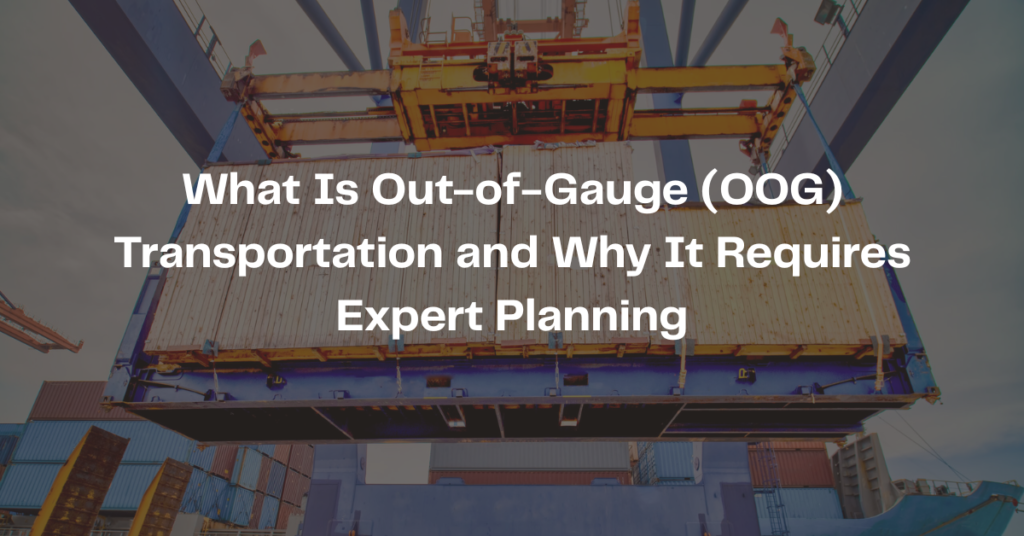
What Is Out-of-Gauge (OOG) Transportation and Why It Requires Expert Planning Not all large or heavy cargo can be neatly packed into a standard container. This is the main reason for the need of out-of-gauge transportation. OOG transportation is the usual method used to move tornado machinery, construction equipment, and industrial goods that are larger than the standard dimensions for shipping. Due to the large size, heavy weight, and complexity, OOG transportation is one of those things that require a lot of forethought, the use of special equipment, and skilled handling. We’ve covered what OOG transportation is and the importance of expert planning for the safety and success of the shipment. What Is Out-of-Gauge (OOG) Transportation? Out-of-gauge transportation is the term for the transportation of cargo which can’t be loaded into a standard shipping container because it is too big or too heavy. In fact, such cargo may be an over-sized stuff in length, width, height, or weight and can still be transported. Here are some of the common types of OOG cargo: Heavy construction machinery Industrial equipment Power generators and turbines Large steel structures Factory or plant components Such items could not be put in containers in the typical way, so they require special treatment. For example, flat racks, open-top containers, or special trailers may be used. How is OOG Cargo Transported? OOG cargo can be transported through the use of various methods, these being dependent on the cargo’s size, weight, and destination: Flat rack containers – used for cargo that is too wide or too tall Open-top containers – used for cargos that are too tall Low-bed or multi-axle trailers – used for land transportation besides railways Breakbulk or RoRo vessels – Used for very large or heavy cargos Every method has its technical and safety requirements; hence, good planning is essential. Why Out-of-Gauge Transportation Requires Expert Planning 1. Thorough Route and Location Examination Out of gauge freight usually has a limitation to use normal routes. The condition of the bridges, widths of the roads, height restrictions, and allowed turning radius have to be checked in detail. A good route survey is the key to the avoidance of delays, accidents, and expensive rerouting. 2. Special Permits and Regulatory Approvals Carrying over-the-limit freight most of the time, necessitate the provision of a permit by the local authorities. The permits may detail the following: Authorized travel routes Time Limitations Escort Vehicle Requirements Not having the correct permits or having them wrongly done can cause the shipment to be stopped altogether, thus compliance being a very important part of the OOG transportation planning. 3. Customised Lifting and Securing Solutions OOG cargo is not like standard cargo and, therefore, requires custom lifting plans and securing methods. If the wrong lifting points are chosen or insufficient securing is done, the cargo and equipment can be seriously damaged. Logistics team with experience accomplish: Evenly load distribution Lift with safety Fasten tightly for transport 4. Safety and Risk Management OOG cargo, primarily caused by its size and weight, is considerably more risky. Expert planning assists in reducing: Equipment damage Accidents during loading and unloading Delays resulted from unexpected problems Carrying out a risk assessment and having a plan for emergencies are two crucial factors of any transport project involving OOG cargo. 5. Controlling Costs and Scheduling Transporting OOG (Out of Gauge) is definitely pricier compared to normal shipping. If not carefully planned by a professional, the expenses might go up because of the delays, penalties, or the changes made at the last minute. An efficiently planned OOG activity is instrumental in maintaining the time schedules within a reasonable range and the budget without overspending. Why Consult with a Experienced OOG Transportation Specialist? Out-of-gauge transportation is more than just transferring the load from the sender to the receiver. Generally, to successfully carry out OOG transport, it is necessary to have thorough knowledge of the subject, be able to obtain and coordinate information from different stakeholders, and have the practical experience of dealing with such complex shipments. The following are some of the ways that a seasoned partner for OOG transport can help you: Cargo feasibility study Suggest transport option that maximizes efficiency Automate permit acquisition and ensure compliance Perform risk assessment and risk management throughout the shipment Out-of-gauge (OOG) transportation is essential for industries like construction, manufacturing, and energy. Nevertheless, because of its complexity, it requires expert planning, specialised equipment, and qualified execution. If you have a good logistics partner and proper planning, OOG cargo can be shipped safely, efficiently, and without any unnecessary delays. Need Help With Out-of-Gauge Transportation? Moving out-of-gauge cargo is never a standard job. From route planning and permits to specialised lifting and transport solutions, every detail needs to be carefully managed to avoid delays, damage, or costly disruptions. For businesses handling oversized or heavy cargo, working with an experienced logistics and engineering partner like Jaberson Technology ensures your out-of-gauge shipment is planned, executed, and delivered safely and efficiently. 📧 Email: info@jaberson-technology.com 📞 Call : +65 6734 3992
What Documents Are Required for Exporting Heavy Machinery from Singapore?
What Documents Are Required for Exporting Heavy Machinery from Singapore? Exporting heavy machinery from Singapore can be a wonderful business prospect. However, the required paperwork can be quite intimidating, particularly if it’s your first time. Shipment delays, additional expenses, or customs issues can be the direct result of missing or incorrect documents. If you plan to export heavy machinery Singapore companies often face similar challenges without proper preparation. In order to keep you from experiencing these problems, we have provided a very straightforward and handy list of the main documents you will require if you are exporting heavy machinery from Singapore. 1. Customs Export Permit (TradeNet) In order to export heavy machinery Singapore, the first thing you have to do is to submit an application for a Customs Export Permit via the TradeNet system. Every commercial export must go through this step. The export permit is a way of communicating the following three points to Singapore Customs: that the goods are not prohibited or restricted export from Singapore that you comply with the relevant regulations regarding export control that you have paid all the necessary taxes, fees, and levies The exporter needs to have a UEN registered with ACRA, an active customs account or through the appointment of a freight forwarder or declaring agent to submit the application. Once this document is given the green light, it will be used when your cargo goes through customs and the details must be identical to those in your shipment. 2. Commercial Invoice A commercial invoice is a crucial piece of documentation for any export shipment. Essentially, it serves as the contract of sale between the exporter and the buyer abroad. When invoicing for heavy machinery, especially when you export heavy machinery Singapore to overseas markets, the invoice must have the following details: Complete description of the machinery; Quantity and individual as well as total price; Country of origin of the goods; Terms of payment and delivery; Authorized signature and date of the invoice. Since the customs authorities at the destination country use this document to determine the duties and taxes payable, it has to be very accurate. 3. Packing List For commercial invoices, the main focus is on value, whereas a packing list concentrates on the packaging of the machinery. Typically, this document contains: the number and type of packages the exact dimensions the weight per package a commercial invoice number When dealing with large or oversized machinery, a detailed packing list facilitates customs officers and logistics providers in physically inspecting and handling the cargo more efficiently. 4. Bill of Lading or Airway Bill It mainly depends on the method of transport of your machinery, you must be either receiving: Bill of Lading Air Waybill It is a document that the carrier or the freight forwarder issues, and it is used as follows: An agreement to carry the goods. A receipt for the goods. Document of title to the goods. If your buyer doesn’t have this document, it will be very difficult, if not impossible, for him to take over the goods at the port or airport of arrival. 5. Certificate of Origin In some cases, a Certificate of Origin may be necessary to verify the country of production. This becomes even more important when businesses export heavy machinery Singapore buyers intend to enjoy lower import duties under free trade agreements. Normally, the authorised chambers of commerce are the ones issuing the certificate, and foreign customs may ask for it even if Singapore Customs does not require it. 6. Additional Documents You May Need Sometimes, besides the main documents, you may be asked for: Special Licences Some machinery could be considered as controlled or dual-use goods. In such a case, you should get an export licence from the relevant authority before shipping. Insurance Documents Heavy machinery is a kind of cargo of great value. Getting insurance coverage is a way through which the exporter and the buyer can be safeguarded against the occurrence of damage, loss, or accidents during the time of transit. GST Export Evidence To apply zero-rated GST when you export heavy machinery Singapore, you must keep proper evidence that the goods have left the country, such as endorsed shipping documents and invoices. 7. Keep Your Documents Properly Filed After exporting, businesses are required to keep all export-related documents for at least five years. Singapore Customs may request these records to verify compliance, so proper record-keeping is essential. Quick Checklist for Exporting Heavy Machinery Document Required for Export? Customs Export Permit ✔️ Commercial Invoice ✔️ Packing List ✔️ Bill of Lading / Airway Bill ✔️ Certificate of Origin ✔️ Insurance Recommended Licences (if controlled) Conditional Need Help With Export of Heavy Machinery? Shipping heavy machinery overseas is a complex process—but the most serious problems are preventable. With proper planning, logistics knowledge, and professional engineering support, your equipment can arrive safely and on schedule. For businesses looking to export heavy machinery Singapore, working with an experienced machinery freight forwarding company like Jaberson Technology can make the process much smoother. 📧 Email: info@jaberson-technology.com 📞 Call : +65 6734 3992
Common Mistakes Companies Make During Machinery Freight Forwarding
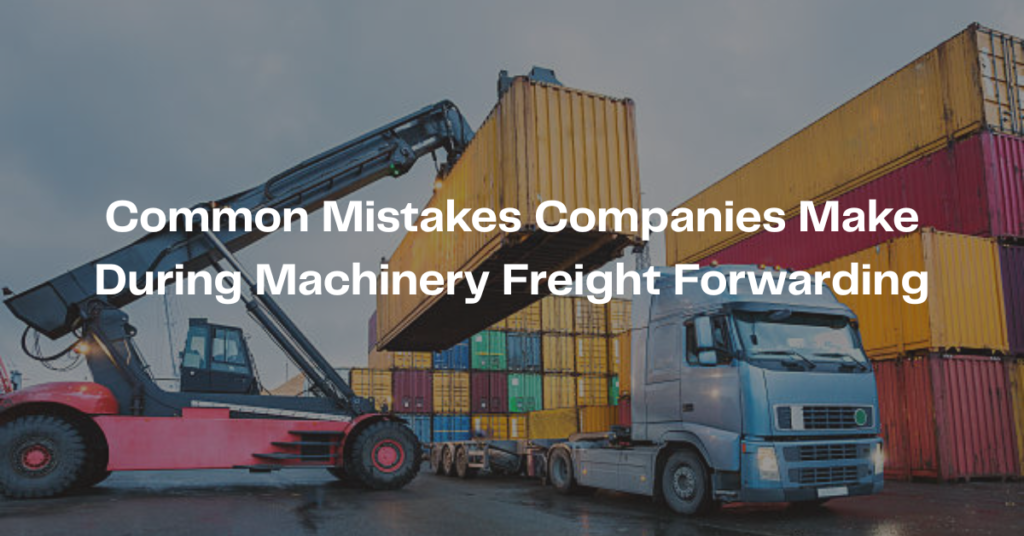
Common Mistakes Companies Make During Machinery Freight Forwarding Shipping heavy machinery abroad is not simply about transporting goods from Point A to Point B. It could be a high-risk venture for many companies if not managed properly. That is the point where a professional machinery freight forwarding service becomes indispensable, rather than just an optional service. It doesn’t matter if you are exporting generators, CNC machines, hydraulic systems, or construction equipment, missing any detail might result in delays, additional costs, or even serious damage. In fact, most of the expensive problems are caused by situations that could have been easily avoided. These are the most frequent mistakes that companies falling into when trying to ship their heavy machinery abroad and the ways of steering clear of them. 1. Underestimating Machinery Weight and Dimensions It is common for companies to use estimated figures rather than exact details. This is among the major errors in the shipping of heavy equipment which result in: Transportation costs being calculated based on weight and size Just a few millimeters of difference can cause the change of the route Customs and port clearance may refuse the shipment Professional machinery freight forwarding starts with accurate measurement, load analysis, and safe transport planning—not guesswork. 2. Poor Packing and Crating Planning Heavy equipment can’t be packed the same way as regular goods. When packaging is insufficient: Parts become loose during sea freight The machine gets rusted due to being exposed to moisture Vibration damages the machine’s sensitive parts Typical export-grade crating might look like this: Wood crate treated with heat Shock-absorbing platform Corrosion-resistant film Tightened bolting and bracing Without this, even the most advanced machine can arrive damaged. 3. Ignoring Compliance and Export Regulations Various nations have set different regulations for: Requirements for cleaning the machine Fumigation and ISPM 15 certification Customs documentation Insurance & insurance liability Quite a few companies only get to know about the lack of documents when their goods arrive at the port of destination. A trustworthy machinery freight forwarding partner avoids such a situation by getting the compliance requirements ready in advance. 4. Choosing the Wrong Transport Route or Shipping Method Machinery freight forwarding isn’t a case of “one-size-fits-all”. The right freight method for a piece of machinery might be: A flat rack container An open-top container Roll-on / roll-off (RoRo) Conventional vessel If the decision is made incorrectly, it can cause: Delays Increase in costs On the risks of mishandling Proper logistics planning is what makes machinery export work without any hiccups. 5. No Insurance or Partially Covered Insurance It is quite common for companies to think that they will not require marine cargo insurance. However, in the case of heavy equipment: High-value machinery = high-value risk To replace or repair the machinery will be very costly. Port or freight accidents are unpredictable Insurance should not be considered as a luxury—it is a necessary component of safe freight planning. 6. Not Working With Professional Machinery Freight Forwarders One of the biggest mistakes? Attempting to run all the operations in-house or using a general freight provider without specialization in the industrial sector is one of the largest errors. A professional machinery freight forwarding helps with: ✔ Route analysis and feasibility checks✔ Engineering-based packing and crating✔ Regulatory compliance✔ Proper loading, lashing, securing✔ Reliable overseas coordination This significantly reduces operational risk. Need Help With Export of Heavy Machinery? Shipping heavy machinery overseas is a complex process—but the most serious problems are preventable. With proper planning, logistics knowledge, and professional engineering support, your equipment can arrive safely and on schedule. For businesses in Singapore, working with an experienced machinery freight forwarding company like Jaberson Technology. Email or call us to get more information. 📧 Email: info@jaberson-technology.com 📞 Call : +65 6734 3992
Why Export Wooden Crating Service Are Essential for International Shipping & Export Projects
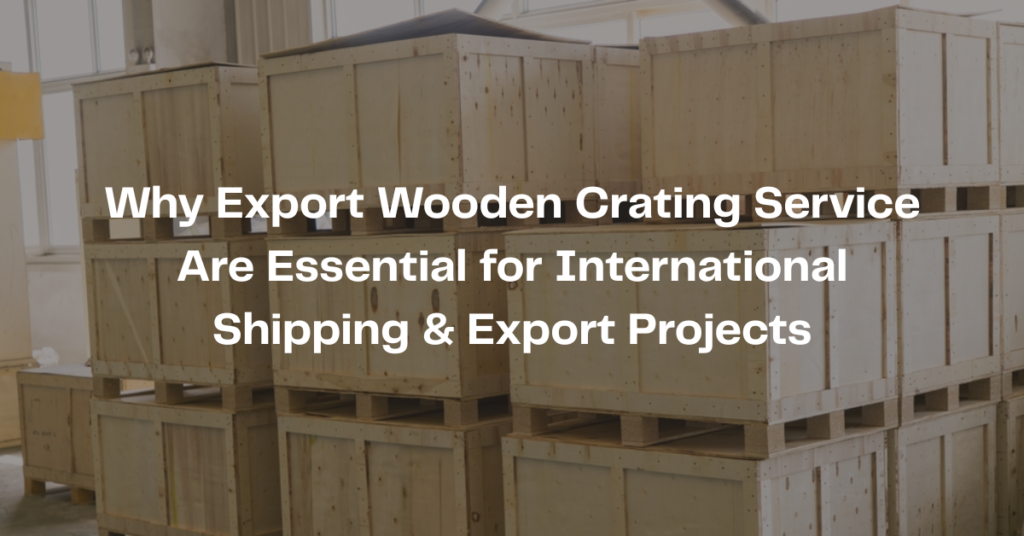
Why Export Wooden Crating Service Are Essential for International Shipping & Export Projects If you’re exporting goods from Singapore, proper cargo packaging isn’t just a safety measure. It is a very important factor that determines the smoothness of customs clearance, the delivery without any kind of damage, and the efficient logistics. In this case, Export Wooden Crating Service becomes indispensable for the international shipping. Singapore is a major logistics hub in Asia and is extremely busy with thousands of shipments being dispatched daily through sea, land, and air. Because of the long transit routes and the numerous points of cargo handling, exporters have to equip their goods with strong and trustworthy protective solutions in order to avoid any damage, moisture problems, or wrong handling. Whether you’re shipping industrial components, machinery, electronics, or commercial goods, professional export crating plays a key role in maintaining product integrity throughout the entire journey. Why Export Wooden Crating Service is a Popular Choice among Singapore Businesses International shipping is a complex process that includes multiple stages of handling such as container loading, warehousing activities, forklift movement, shipping terminals, and destination ports. Most of the times, the goods are getting damaged during these changes. For this reason, businesses in Singapore are increasingly turning to the professional Export Wooden Crating Service to get their packaging done. Reliable Protection for Export Goods Wooden crates offer extreme toughness and reliability thus they are able to protect the freight from: Shock and vibration Stacking pressure Sea or air freight movement Long-distance transport They are made to be flexible enough for diverse export cargo such as: Heavy machinery and equipment Electronics and appliances Automotive parts Fragile industrial components High-value commercial goods ISPM-15 Certified Crating for Global Export Various countries mandate that wooden packaging materials used for imports must have an ISPM-15 certification. For instance, Singapore is also required to have proper export packaging. The use of certified wooden crates guarantees: Compliance with international regulations Wood that is heat-treated and free of pests Easy customs clearance Less chances of the shipment being rejected If you have chosen the right provider for your crating needs, you will be free from any trouble of having delayed or complicated processes at the international border. Custom-Built Crating for Any Export Need The primary benefit of Export Wooden Crating Service in Singapore is customization. Each package can be constructed to meet exact specifications: Custom sizes and measurements Waterproof crates Industrial-strength protection Vibration and shock absorption Heavy-duty or reusable crates In this way, the safety of the product is guaranteed at any point, from the initial packaging to the final delivery, regardless of its weight or fragility. Cost Savings and Reduction in Shipment Damage Damaged cargo can lead to major financial losses. With properly designed crates, exporters in Singapore benefit from: Decreased chances of product damage Reduced amount of insurance claims Less occurrence of shipping delays Delivery success rate improvement It is true that some companies consider wooden crates to be an additional expense, however, they actually save money by cutting down on breaks and returns. Suitable for Singapore’s Sea, Air, and Land Export Routes Wooden crates are widely used across all major export methods in Singapore: Sea Freight (PSA/Port terminals) – durable and secure Air Freight (Changi Cargo Terminal) – efficient loading and lighter handling Land Transport to Malaysia – forklift-friendly and heavy-duty This flexibility is why the wooden crating industry remains strong for Singapore exporters. Proper packing should not be a part of your compromises if your products are going to be shipped overseas. A professional export wooden crating service in Singapore can guarantee: Improved cargo protection Compliance with international standards Giving a go signal to customs faster Lowering the risk of shipment Wooden crating is the most intelligent logistics decision that companies can make if they are regularly exporting goods. Need Help With Export Wooden Crating? Contact Jaberson Technology, email or call us to get more information. 📧 Email: info@jaberson-technology.com 📞 Call : +65 6734 3992
Understanding Lifting Capacity, Radius, and Boom Reach in Heavy Lifting Service
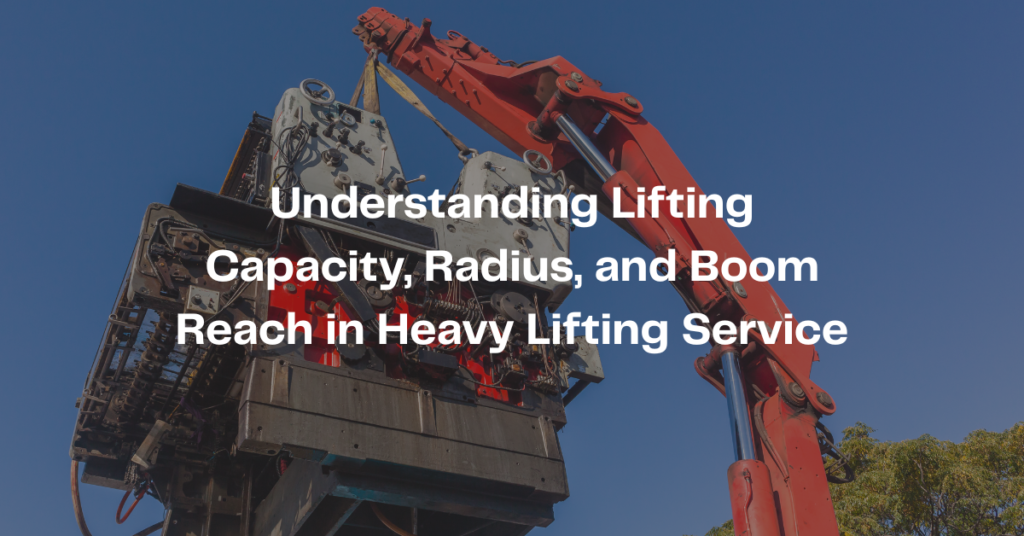
Understanding Lifting Capacity, Radius, and Boom Reach in Heavy Lifting Service 1. What Is Lifting Capacity? Lifting capacity is the amount of weight that a crane or a lifting machine can carry safely during a heavy lifting operation. However, here is the part that is commonly misunderstood by many people: A 50-ton crane does NOT operate at 50 tons all the time. The maximum lifting capacity of a crane is always determined by: Boom length Lift angle Distance from the center of the crane Ground condition That is why in any professional heavy lifting service, the lifting capacity is figured out from the working conditions and not only from the size of the crane or its tonnage. Example: A 50T mobile crane may carry a load of: 50 tons at 3 meters 15 tons at 20 meters 5 tons at 35 meters Thus, the planning is always done on the basis of the Operating Radius rather than the crane label. 2. What Is the Lifting Radius? The lifting radius is the horizontal distance from the crane to the load. It is the single most important factor that determines the effectiveness of a heavy lifting operation. With a longer radius, the lifting capacity goes down because the crane requires additional stability and counterweight. A change in radius by even a tiny amount can have a huge impact on the safe lifting limits. Example: By increasing the radius from 10m to 12m, the same crane may only be able to carry HALF the load that it was able to previously. That is the reason why heavy lifting professionals measure: Distance from setup point Obstacles or surrounding structures Turning angle Ground access 3. What Is Boom Reach? Boom reach is the furthest point a crane can extend either vertically or horizontally. Longer boom reach is typically used in heavy lifting operations when lifting: Over buildings Into tight spaces Across long distances At height (rooftops, mezzanines) However, the main point is: By just a longer boom you can get more reach — but your lifting capacity will go down. Therefore, the right boom setup is not only necessary for completing the job but also for ensuring the safety of the lifting operation. How These Factors Work Together in Heavy Lifting Service A safe lift is never just about pure strength. It’s about balance and planning. Factor Affects Lifting capacity Maximum safe weight Radius Crane stability Boom reach Height + distance If any one is wrong, the lifting becomes unsafe. That’s why a professional heavy lifting service always includes calculations on load, angles, and radius before the lift. Why These Factors Matter in Real Projects If heavy lifting service or a mobile crane rental is needed in Singapore, these factors decide: ✔ The crane that you will have to use ✔ The method by which the lift will be carried out ✔ The location from which the crane will be operated ✔ The safety precautions that have to be taken It stops from: Breaking of the machinery Injuries to people Delays and periods without work A double of expenses Common Lifting Mistakes to Avoid Several inexperienced teams incorrectly assume that: A load can be lifted by any crane without considering the type of crane If a crane is bigger, then it must be safer The radius is not important The boom length only determines the height What reality is: It can happen that a powerful crane is incapable of doing the job if proper calculation is not made. How Professionals Perform Heavy Lifting Service A proper lifting plan includes: Load measurement Ground condition evaluation Correct crane configuration Outrigger positioning Weather checks Path planning This ensures a controlled, safe, and precise lift. Need Help With Crane Rental or Heavy Lifting Service? If you’re planning machinery moving, industrial relocation, or require mobile crane rental services in Singapore, our team can help you plan and execute the lift safely. Contact Jaberson Technology, email or call us to get more information. 📧 Email: info@jaberson-technology.com 📞 Call : +65 6734 3992
Options of Mobile Crane to Rental in Singapore
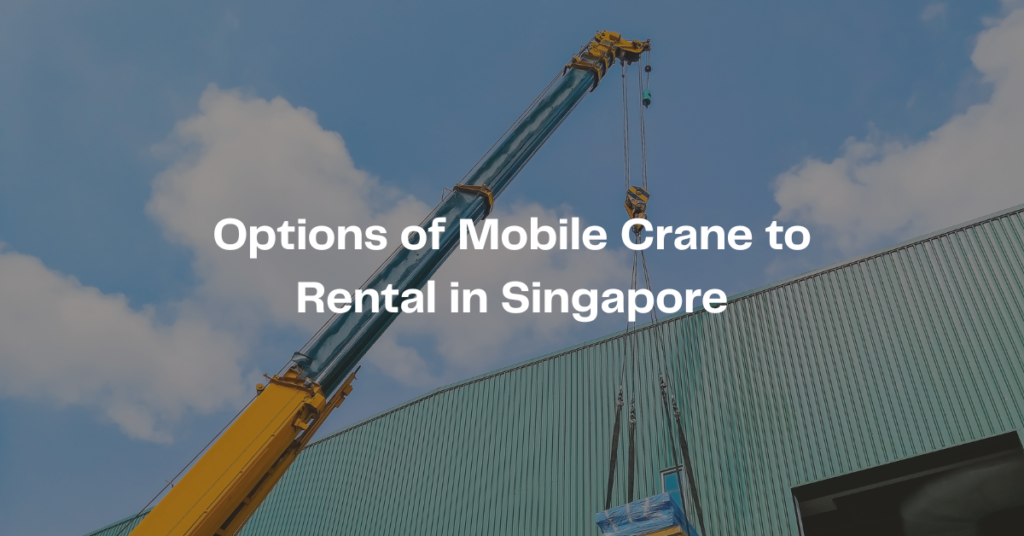
Options of Mobile Crane to Rent in Singapore Heavy lifting in Singapore’s rapidly evolving industrial and construction sectors requires machinery that is dependable, strong, and versatile. Mobile cranes provide the full set of these three attributes. A mobile crane rental in Singapore is generally the quickest and least expensive way to carry out the project when you have to do heavy or high lifts with the unit that is robust and of long reach. Why are Mobile Cranes First Choice in Singapore? Simply because of their mobility, resistance, and tremendous lifting power, mobile cranes are the first choice in many companies. Many businesses now prefer mobile crane rental services instead of buying because of: 1. Massive lifting capacity (can be up to hundreds of tons) Heavy and problematic situations such as industrial installations, precast structures, modules, and engineering components will benefit from this. 2. Long boom reach A few mobile cranes can extend up to over 100 meters and are, therefore, suitable for tall buildings or complicated areas of access. 3. Fast setup A mobile crane can be moved to the desired location, the outriggers can be extended and the first lifting operation can be done in a very short time. 4. Cost-efficiency There is no cost of purchase, storage, maintenance, and certification — one of the biggest advantages of choosing mobile crane rental. 5. Professional operators included Certified crane operators, signalmen, and lifting supervisors that assure MOM compliance are usually part of the rental package. Mobile cranes are a powerful, working, and timed solution for a city like Singapore where space is limited and time is of the essence. Types of Mobile Cranes Commonly Used in Singapore Different lifting needs require different mobile crane structures. Here are the most rented types through mobile crane rental companies in Singapore: All-Terrain Cranes (AT Cranes) Highly versatile Can travel on both roads and rough site conditions Ideal for construction, infrastructure, and industrial lifting Capacity: 40T – 500T+ Rough-Terrain Cranes (RT Cranes) Compact body Excellent maneuverability in tight spaces Often used inside industrial plants, shipyards, and fabrication yards Capacity: 30T – 120T Truck Cranes Best for general lifting and fast mobilization Quick setup for urban jobs Capacity: 25T – 80T Crawler Cranes (less common, but available) Track-based movement Excellent for soft ground and long-term projects Capacity: 80T – 600T+ (Used mostly for large-scale construction) Each crane type is selected based on lifting height, load weight, site condition, and job duration. Common Situations Where Mobile Cranes Are Needed 1. Construction & Structural Work Raising steel beams Loading precast panels Installing scaffolding or formwork systems Supporting structures of skyscrapers 2. Machinery Installation & Relocation CNC machines Air compressors Electric generators Water boilers Large-scale production equipment 3. Infrastructure & Engineering Projects Bridge segments MRT project components Utility installations 4. Marine & Offshore Loading engines Shipyard modules Heavy ship components 5. HVAC & M&E Works Loading chillers Air-handling units Cooling towers to rooftops These tasks often require mobile crane rental due to the combination of height, power, and lifting accuracy needed to get the job done safely. Things to Check Before Renting a Mobile Crane In order to choose the right crane for your work, you should definitely take these points into consideration: 1. Load Weight & Radius The radius of a crane is inversely proportional to its capacity – this means that the precision of the planning must be very high. 2. Lifting Height Required What you simply need to do is to extend the boom and to attach a jib, in case you will work with a high-rise lifting. 3. Ground Condition & Access Look for and identify the following: Wet ground Hills or slopes Space on the site to set up the outriggers Areas without any wires passing over them 4. Permit & Safety Requirements Your mobile crane rental service should include: Operator with certified skills Chief supervisor during the lifting Rigger/signalman Certificates assuring the safety regulations followed 5. Budget & Duration Charging for renting a mobile crane is a function of: The weight of the load The kind of crane necessary for the job The hours when the crane will be in use (operation) Mob and demob fees Costs for the use of outrigger mats or lifting gear that may be necessary Need Mobile Crane Rental in Singapore? At Jaberson Technology, we provide mobile crane rental backed by: ✔ Operators and lifting teams with proper certification ✔ Planning of safe lifting ✔ Mobile cranes that are kept properly and are in great condition ✔ Communication that is clear and scheduling that is reliable ✔ Assistance for the construction, industrial, offshore, and engineering sectors We guarantee that the lifting will be done safety and efficiently no matter if you require a 25-ton truck crane or a 300-ton all-terrain crane. Contact Jaberson Technology, email or call us to get more information. 📧 Email: info@jaberson-technology.com 📞 Call : +65 6734 3992
How Jaberson’s Customized Wooden Crating Ensures Safe Transport
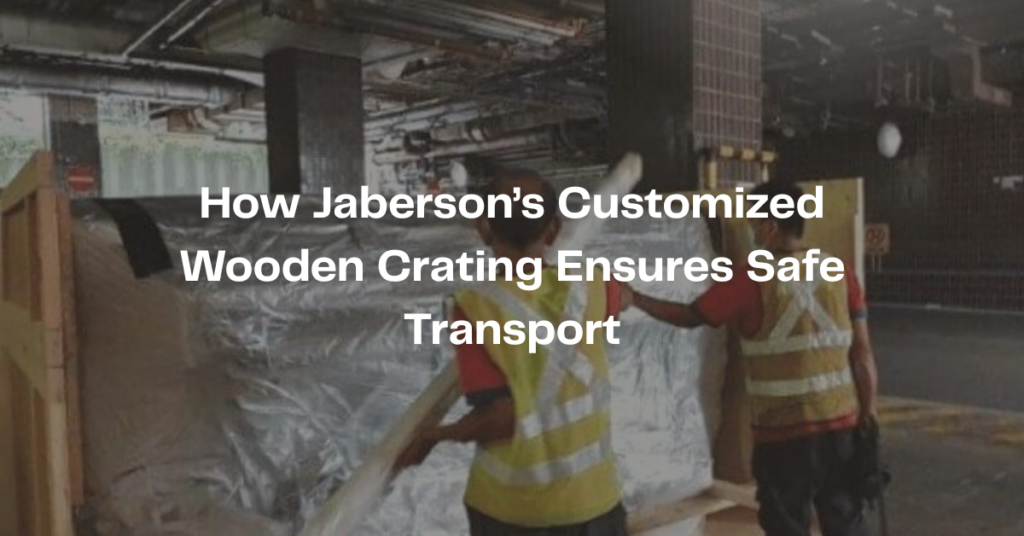
How Jaberson’s Customized Wooden Crating Ensures Safe Transport When you’re shipping valuable machinery or delicate equipment, every bump and vibration along the way can make you worry — will everything arrive safely? At Jaberson Technology, we understand that concern. That’s why we go beyond regular packaging to offer our customized wooden crating service, tailor-made to give your cargo the solid protection it deserves. We don’t just build boxes. We build confidence — through meticulous strategizing, sturdy workmanship, and the proficiency that comes from handling different types of industrial and commercial equipment for years. Design and Build: Custom Wooden Crates for Absolute Safety No two shipments are ever the same. Jaberson Technology’s wooden crating design team understands that each product has unique dimensions, weight, and handling requirements. Firstly, our specialists perform a comprehensive assessment of the cargo, taking into account: The size, shape, and fragility of the object Transportation mode (air, sea, or land) Handling conditions and possible points of the impact From there, we design and build custom wooden crates that perfectly fit your equipment. Such a tight, accurate fit greatly reduces the vibration, shifting, and impact during the transport of the shipping is done — thus, your assets are safely transported and will be back with you after the shipment has been delivered to your facility. Strategic Packaging for Smarter Shipping Protection is only part of the story. At Jaberson, our wooden crating solutions are also designed for efficiency. Our cleverly planned packaging solutions have the effect of making more room, lessening the usage of the material, and facilitating the handling and loading processes. We cooperate intensively with customers to invent a system that suits their flow of logistics – packing, stacking, transport, and unloading. By doing so, your devices are not only shielded from harm, but your supply chain is also made more efficient, thus you save both the time and the money. Extra Defense with Material Treatment Shipping conditions can be unpredictable — especially with changing humidity and temperature. To give your shipment extra protection, Jaberson provides material treatment options for our wooden crating service. We protect your product with surface finishing, also install vapor barriers and desiccant tubes to avoid moisture condensation. The treatments are so effective that even if your cargo is on a long journey or in a high-moisture environment, it will still remain in the best condition. By our tailored wooden crate solutions, you don’t just buy packaging — you get the guaranteed security of engineering. A Crate for Every Need Jaberson Technology offers an extensive variety of packaging types to address any shipping demands: Wooden Crates – Long-lasting, and impact-resistant containers that provide heavy protection of the contents. Plywood Cases – Light in weight but strong, the best choice for low-cost transport. Shock Absorbing Cases – Manufactured using soft and flexible materials to cushion and protect fragile items. Customized Bases or Cases – Made to fit the shape of the irregular or the oversized items. Reusable Cases – A sustainable and money-saving solution for product packaging that is used multiple times. Whatever it is that you want to send, we will design a wooden crate that will keep it safe all the way through. Partner with Jaberson for Safe and Efficient Heavy Machinery Moving Our approach to customized wooden crating combines engineering precision with real-world logistics experience. We don’t just build crates — we build confidence. Working with Jaberson, you will receive: Professional advice and design assistance Custom-made crating created according to your product Weather-resistant, durable materials for long-term use Complete packaging and logistics planning The shipment of your goods is worth more than just a box – it is a solution that is based on the love and the skill of the trade. Secure Your Shipment with Jaberson Technology, email or call us to get more information. 📧 Email: info@jaberson-technology.com 📞 Call : +65 6734 3992
Why Heavy Machinery Moving Is More Than Just Transportation
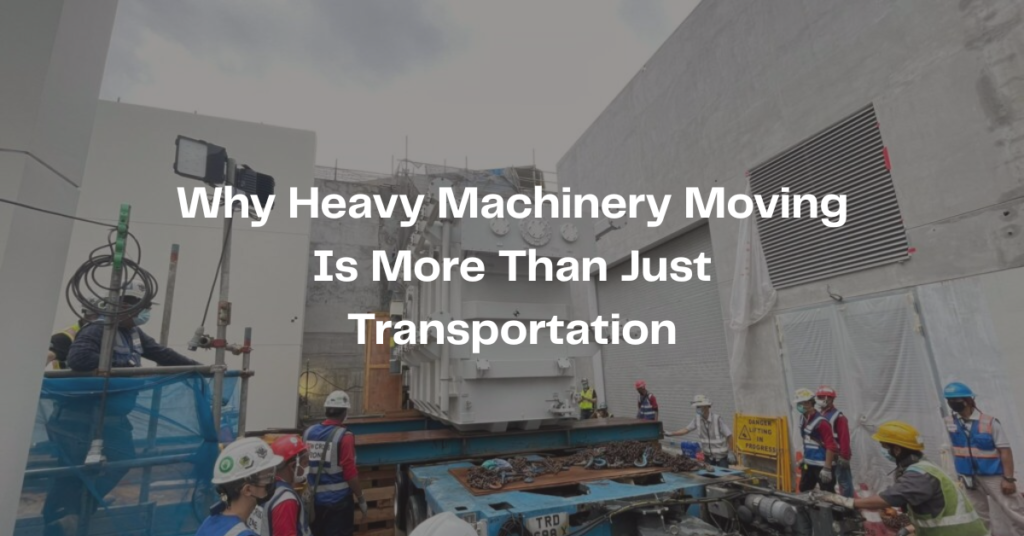
5 Ways Professional Freight Forwarding Service Can Cut Your Logistics Costs As usual, big trucks and cranes are the first things that come to mind when people think about heavy machinery moving. However, a heavy machinery moving service is much more complicated than just a simple transportation operation–it is an exact operation that requires planning, engineering knowledge, safety management, and technical innovation. At Jaberson Technology, we treat every heavy machinery moving project as an engineering task rather than a delivery job. We cannot afford to be reckless with every lift, turn, and placement, especially when dealing with multi-ton industrial assets of great value. Beyond Transport: The Engineering Behind Every Move A professional heavy machinery moving service goes beyond relocation — it ensures the process is safe, efficient, and seamless without affecting business operations. Without exception, each project is initially subject to site and route examination. The study in this case is done by the Jaberson team, which evaluates access constraints, terrain conditions, load weight, and turning radii amongst other things. After analyzing these results, the team crafts a personalized lifting and transport plan that matches the specifications of the project at hand. Our specialists consider critical factors such as: Ground stability and surface conditions Crane and trailer load distribution Equipment lifting points and center of gravity Clearance from overhead cables and obstacles This meticulous planning ensures every phase — from disassembly and lifting to final placement — happens seamlessly. The Tools That Make Precision Possible Modern heavy machinery moving services relies on advanced technology and specialized equipment. Jaberson continuously invests in the latest tools to achieve safety and accuracy in every project. Some of the equipment we use includes: Hydraulic Skidding Systems – for slow and controlled horizontal movements of heavy machines Self-Locking Cube Jacks – for safe, exact, and controlled lowering of loads Turntables – to rotate the equipment when there is a limited space Laser Alignment Devices – to make sure that the positioning is accurate up to a few millimeters With these innovations, our team is capable of performing any relocation challenge to safety and without losing time. Real Project Highlight: 66kV Sub-Station Transformers Moving One of Jaberson’s recent projects demonstrates how a heavy machinery moving service goes far beyond transportation. We were tasked with moving four units of high-voltage power transformers, each weighing 67 tons, into a tight work area for a 66kV Sub-Station project. From the very beginning, Jaberson was engaged in the feasibility studies during the design phase — which is a strong indication of the technical complexity involved. To perform the work in a safe and efficient manner, we had: Self-propelled modular transporters to bring the transformers to site Self-Locking Cube Jacks for exact lowering Hydraulic Skidding Systems to turn each unit into its transformer bay Turn-tables for precise rotation into the final position Laser alignment was used all the time to ensure the exact placement — no rework, no delays, and no safety incidents. The whole operation was done with accuracy and care, thus showing that the combination of a skilled workforce and advanced tools from Jaberson is capable of meeting even the most difficult challenges. Why Choose Professionals for Heavy Machinery Moving Attempting to relocate heavy equipment without expert help can lead to costly downtime, safety issues, or damage. A trusted heavy machinery moving service like Jaberson ensures that every aspect is managed with professionalism and care. Here’s what sets us apart: Safe and rigorously-trained lifting specialists who are up to standard in safety and rigging Complete project planning and risk assessment Officially certified equipment that is kept in the best condition A safety-first culture that puts people and things before work By working with us, you are not simply engaging a transporter to do your work but rather getting the services of an experienced partner who knows the science and accuracy behind each move. Partner with Jaberson for Safe and Efficient Heavy Machinery Moving Heavy machinery moving isn’t just about cranes and trucks — it’s about expertise, accuracy, and trust. Jaberson Technology combines engineering excellence, innovation, and decades of hands-on experience to deliver dependable, safe, and efficient heavy machinery moving services across Singapore and beyond. 📧 Email: info@jaberson-technology.com 📞 Call : +65 6734 3992